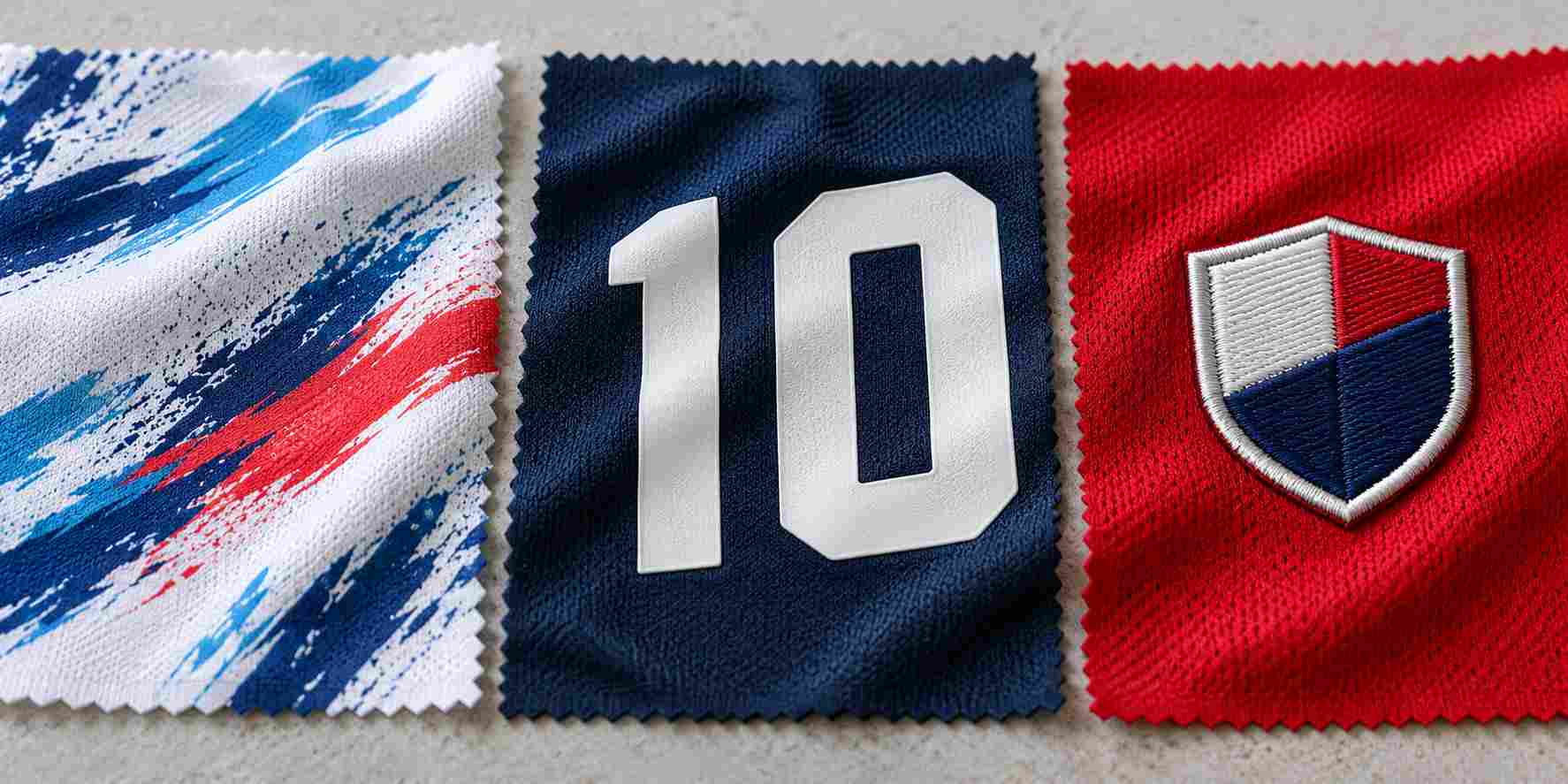
Compare three common football-shirt decoration methods by fabric, design, feel and sampling needs—so your club can choose the right finish.
Illustration: the featured image is an original visual comparison, not a photograph of tested USSportWear samples. The right decoration choice depends on fabric, artwork and the approved production sample.
A custom football shirt may use more than one decoration method. The body pattern might be sublimated, a player's name and number heat-applied, and a small crest embroidered. Treating all three as interchangeable can lead to the wrong feel, color or finish. This guide compares where each method works well and what a club should check before approving a bulk order.
The short answer
- Choose sublimation for an all-over, multi-color design on suitable polyester fabric.
- Choose a compatible heat transfer for names, numbers or smaller graphics, especially when player details vary across shirts.
- Choose embroidery when a stitched, raised crest is important and the fabric can support it comfortably.
These are use cases, not guarantees. A skilled supplier may combine methods on the same kit. USSportWear lists sublimation, heat transfer and embroidery among its customization options; a project quote and sample should confirm which combination is suitable for your design.
How is sublimation different?
Dye sublimation uses heat to put color into a compatible polyester-based material rather than leaving a separate film on top. That makes it useful for broad color fields, gradients and patterns across the shirt. It is not a universal way to print on any fabric: Epson’s sublimation guidance says the process is intended for polyester or polyester-coated substrates, with white or light-colored bases generally giving the best result. If your club wants a dark cotton shirt, ask for another method rather than assuming the same design will sublimate identically.
A sublimated design has no applied film edge to peel, but color consistency, artwork alignment at seams and the approved fabric still matter. Ask to see the final pattern on the actual fabric, not only a digital mockup. Our custom soccer jersey buying guide explains the related choice between sublimated and cut-and-sew construction.
When is heat transfer a better choice?
“Heat transfer” covers several materials and processes; it is not one fixed-quality product. A suitable transfer can make it practical to apply different player names and numbers to the same base kit, or add a sponsor mark after the main shirt design is set. The visible result is an applied layer, so its hand feel and flexibility depend on the transfer, design size and fabric.
Material compatibility is crucial. STAHLS’ technical guidance notes that synthetic jerseys can present adhesion, press-mark and scorching challenges. It also warns that some sublimated polyester garments need a transfer chosen to resist dye migration, where underlying color shows through the applied graphic. A club should request a tested sample using its actual shirt fabric and colors, particularly for a white number on a dark or sublimated shirt. Press temperature and washing instructions must be specific to the chosen material, not copied from an unrelated product.
What does embroidery add—and what can go wrong?
Embroidery forms the design with thread and creates a distinct raised, textured crest. It can suit a compact club emblem, but dense stitching on a light, stretchy match shirt may add stiffness or cause puckering. Madeira, an embroidery-thread manufacturer, advises adapting stitch design, thread, needle and stabilizer to the performance fabric. Its activewear embroidery guide also highlights comfort and backing selection.
Before choosing embroidery, check the inside of a sample as carefully as the outside: backing, stitching and placement can affect how the crest feels against a player's skin. Tiny lettering or intricate details may also need a simplified crest design to stitch cleanly. A woven or applied badge can be another option to discuss if direct embroidery does not suit the fabric.
How should a club decide?
- Start with the fabric. Confirm fiber content and knit construction. The best print or stitch method depends on the garment, not only the artwork.
- Separate the design zones. Consider an all-over body pattern, crest, sponsor marks and each player's name and number individually. One method need not do every job.
- Check the finished feel. Compare a physical sample for weight, flexibility, edge feel, and comfort inside the shirt.
- Test real use. Ask how the specific sample should be washed, then check its appearance after the agreed care cycle. A sample test is more useful than a blanket “never fades” claim.
- Approve placement and color. Get a marked artwork proof and a production sample before the full run, including a dark shirt if your order contains one.
For example, a club ordering a vivid all-over polyester kit with individual player numbers could consider a sublimated base plus transfers specified for that exact fabric. A small stitched crest might be possible, but only if the sample stays comfortable and lies flat. A simpler block-color shirt could call for a different construction and decoration plan. There is no universal winner.
What should you send with a quote request?
Provide your artwork (ideally vector files), fabric preference, quantity and size breakdown, colors, crest dimensions, sponsor placements, a list of names and numbers, delivery destination, and any league-specific kit requirements you have confirmed. Ask the supplier to identify the proposed decoration method for each element, supply a sample, and state the care instructions. USSportWear’s custom kit inquiry is the place to discuss your exact specification; our football shirt care guide covers general washing precautions after delivery.
Bottom line: sublimation handles a large polyester design, compatible heat transfers handle flexible personalization, and embroidery provides a stitched finish for a suitable crest. Match the technique to the fabric and design, then approve a physical sample before bulk production.
