A practical washing guide for printed football shirts and soccer jerseys: care labels, cool cycles, drying, stain checks and club-kit routines.
Short answer: Check the care label first. For many modern printed football shirts, turning the garment inside out, washing it separately or with similar soft items on a cool, gentle cycle, and air-drying it is the safest routine. The label and the printer’s instructions always take priority over any general rule.
Whether you call it a football shirt in Europe or a soccer jersey elsewhere, the weak point is often the decoration: a heat-applied name, number, sponsor mark or badge. Nike’s jersey-care guidance recommends checking the label, washing inside out in cold water on a gentle cycle, avoiding softener and skipping the dryer. Here is how to put those principles to work for one shirt or a whole club’s kit.
Before you wash: read the shirt, not just the internet
Locate the sewn-in care label and any instructions supplied with the custom printing. Fabric composition and decoration methods vary. A polyester training shirt, a vintage collector’s jersey and a sublimated team kit may not have the same limits. If the care label calls for hand washing, do that; if it prohibits ironing or tumble drying, treat those as hard limits.
Inspect the shirt before every wash. Look for lifting print edges, loose embroidered threads, damaged seams and heavy mud or grass stains. Photograph a problem if the garment is new, because premature peeling may be a production or application issue rather than a laundry mistake. Ask the seller or printer before trying a home repair.
How to wash a football shirt, step by step
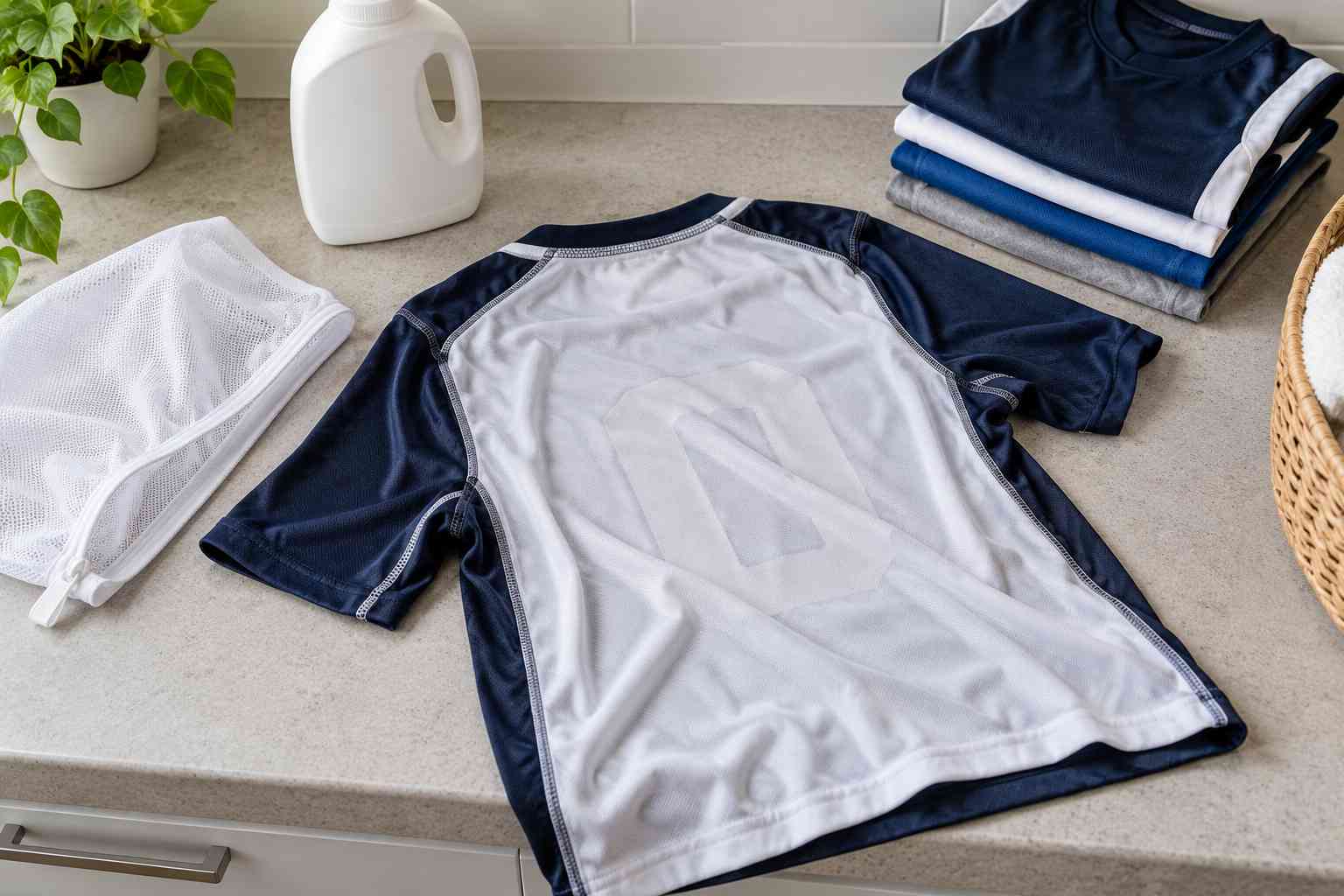
- Turn it inside out. This puts the name, number and front decoration away from friction with the drum and other garments. A mesh wash bag adds another layer of protection, especially for a single prized shirt.
- Sort by colour and texture. Keep whites away from dark colours and avoid rough items such as denim, towels, zips or hook-and-loop fasteners. Wash similar teamwear together when practical.
- Choose a cool, gentle wash. Use the temperature permitted by the label. Cold water or 30°C / 86°F is a common cautious choice for printed polyester shirts, but do not override a stricter care instruction. Select a delicate or sports cycle and avoid overloading the machine.
- Measure mild detergent. Too much detergent can leave residue. Do not assume bleach, aggressive stain removers or fabric softener are safe for your kit. Nike advises against softener for sports jerseys because it can interfere with cleaning fibres that hold odour.
- Remove the shirt promptly. Check that stains have lifted before drying. Keep wet shirts separated rather than leaving them in a heap where colours and prints press against each other.
- Air-dry as directed. Lay flat or hang as the label allows, away from high heat. Do not use a tumble dryer or iron on printed areas unless the garment manufacturer explicitly permits it. Heat can crack or lift applied details.
For bulk teamwear, Nike’s team-uniform instructions also emphasise following each garment label, washing whites separately, avoiding chlorine bleach and fabric softeners, and ensuring kit is completely dry before storage. Those principles are useful for club kit managers even when their teamwear is made by another supplier; the specific product label remains decisive.
What about mud, grass and persistent odour?
Do not attack a stain by scrubbing across a transfer or badge. First remove loose dirt gently. Test a small amount of label-compatible detergent on an inconspicuous spot and treat the fabric around the decoration, not the decoration itself. Rinse or wash according to the label. If the stain remains, repeat a permitted wash rather than setting it with heat. Avoid mixing home remedies or using strong chemicals on an unknown print adhesive.
For odour, wash soon after the match and dry the kit completely. Leaving damp football shirts in a closed bag is a poor club routine. A measured detergent dose and a wash that actually reaches the fabric matter more than adding lots of fragrance or softener. If a shirt still smells, check the label before repeating a gentle wash. A professional laundry can advise on unusual stains or heavily used club stock.
If a name, number or badge starts peeling
Stop machine washing that shirt until you know what kind of print was used. Do not pull at the loose edge or apply an iron directly to it. Some heat transfers can be repaired by a printer with the right temperature, pressure and protective materials; others need replacement. A home iron can permanently scorch fabric or smear a print, so contact the original decorator first. Save a photo and the order details for warranty discussions.
A simple laundry system for club kit managers
Give players or parents a one-page care card when the season’s kit is issued. Record the garment supplier, print method and approved washing instructions. Provide breathable collection bags and separate heavily muddy items from clean spares. Sort light and dark kits, inspect damaged transfers before washing, and label spare shirts by size and number. Fully dry each garment before storing it for the next fixture.
This matters when ordering replacement shirts too. Keep the original artwork, number font and fabric specification so a new player’s jersey can match the squad. Our custom soccer jersey buying guide explains what to confirm before a bulk order, and our 2026–27 design guide covers readable decoration and contrast. If your club needs fresh kit, explore custom soccer jerseys or request a quote with your artwork, quantity and delivery country.
The habit to remember: follow the label, reduce friction and heat, and deal with damage early. A careful wash routine can protect the look of a favourite shirt and make a full team kit easier to manage throughout the season.
