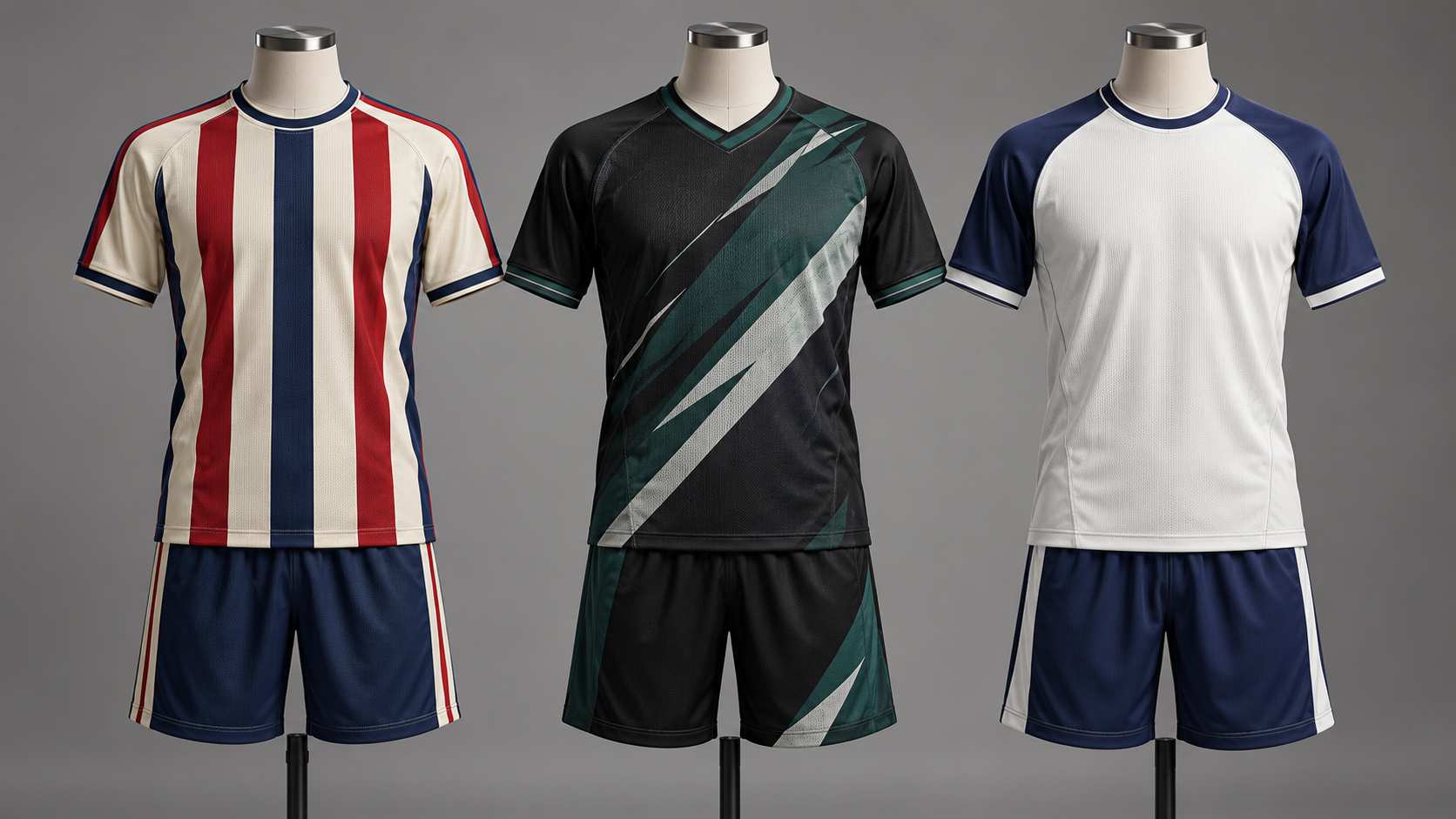
Five original soccer kit ideas inspired by 2026 trends, plus practical checks for contrast, fabric, names, numbers and club reorders.
Great soccer jerseys need more than a striking graphic. For the 2026–27 season, clubs can borrow the energy of this year’s football design conversation while keeping their own identity, readable numbers and a kit that can be reordered. Google’s Summer of Soccer report says worldwide soccer search interest reached a record high in 2026. That attention is an opportunity for clubs and academies to refresh their look.
The ideas below are design directions, not copies of official tournament or national-team kits. If you are ready to source uniforms, our custom soccer jersey buying guide covers construction, fabric and order planning in more detail.
1. Heritage stripes, redesigned for your club
Start with the colors and symbols your players already recognize. A familiar stripe can become fresh through its width, spacing, collar shape or a subtle tonal background pattern. A small reference to your city or club history can make the design feel personal without imitating a famous team.
Make it work: reserve a clean area for the crest, sponsor and front number. Ask for a sample of the striped fabric before approving the whole squad order; narrow stripes can change appearance at a distance or on camera.
2. One bold diagonal, with clear number zones
A diagonal panel gives a custom soccer jersey motion without covering every part of the shirt. For a club, the practical version uses one strong line and restrained accent colors, then keeps the chest and back number zones quiet. It works especially well when the shorts repeat one of the jersey’s accent colors.
Make it work: preview the design with long player names and double-digit numbers. If the graphic passes behind a number, increase contrast or move the graphic. Match the stripe where front, back and sleeve panels meet.
3. Tonal patterns that reveal a local story
A low-contrast pattern can be built from an original geometric motif, a map-inspired line or a shape connected with your community. Tonal artwork often reads as a solid color from the stands but rewards a closer look. This approach gives a new club visual identity without forcing every season’s kit to use the same loud print.
Make it work: test the motif on both a screen mockup and an actual fabric swatch. Check whether small details survive production. Use artwork your club owns or has permission to use.
4. A minimalist home kit and a genuinely contrasting away kit
A clean shirt can stand out when the fit, fabric, crest and one accent are carefully resolved. It also creates a stable base for next year’s additions. The away kit should serve a practical purpose: it must be easy to distinguish from the home kit, opponents and goalkeeper.
FIFA’s account of how 2026 teams choose kits describes why color designation involves more than a quick glance, including camera angles and color-vision considerations. Your local competition may have different rules, so check its uniform requirements before production.
Make it work: review home, away and goalkeeper looks side by side in daylight, in a phone photo and in grayscale. Prioritize distinct light–dark values, not just different color names.
5. One visual system across players, coaches and supporters
The strongest club look extends beyond the match jersey. The same colors, crest placement and typography can connect training tops, warm-up jackets and supporter pieces. That consistency helps a small club look established and gives buyers several coordinated items to order together.
Make it work: keep a simple style sheet with color references, crest files, number font, placement measurements and approved fabric choices. A clear specification makes later reorders easier, especially when new players join.
Choose the fabric and decoration for the actual design
Some artwork suits full sublimation; simple block-color designs may suit cut-and-sew panels. Neither method is automatically best. Ask a manufacturer to quote the same design in the appropriate construction options and compare the physical sample, seams, color and wash-care instructions. Performance claims should be verified on the fabric you approve, not assumed from a product label.
For names and numbers, supply a final roster in a spreadsheet and approve the font, color, height and placement on a size sample. Keep youth and adult measurements separate. If the club expects to reorder, save the exact approved artwork and fabric reference.
A short brief to send your manufacturer
- Club name, delivery country, target date and estimated quantity by size
- Home, away and goalkeeper color plans, with photos or original sketches
- Vector crest and sponsor artwork, plus written permission to use it
- Jersey, shorts and optional training pieces needed
- Preferred fabric feel, fit and any league uniform rules
- Name and number list, plus whether future small reorders are likely
Bring these details to a sample discussion before committing to bulk production. Browse our custom soccer jerseys for original color concepts, then request a tailored quote from USSportWear with your brief. A trend may catch the eye; a readable, comfortable kit that still looks like your club is the better result.
