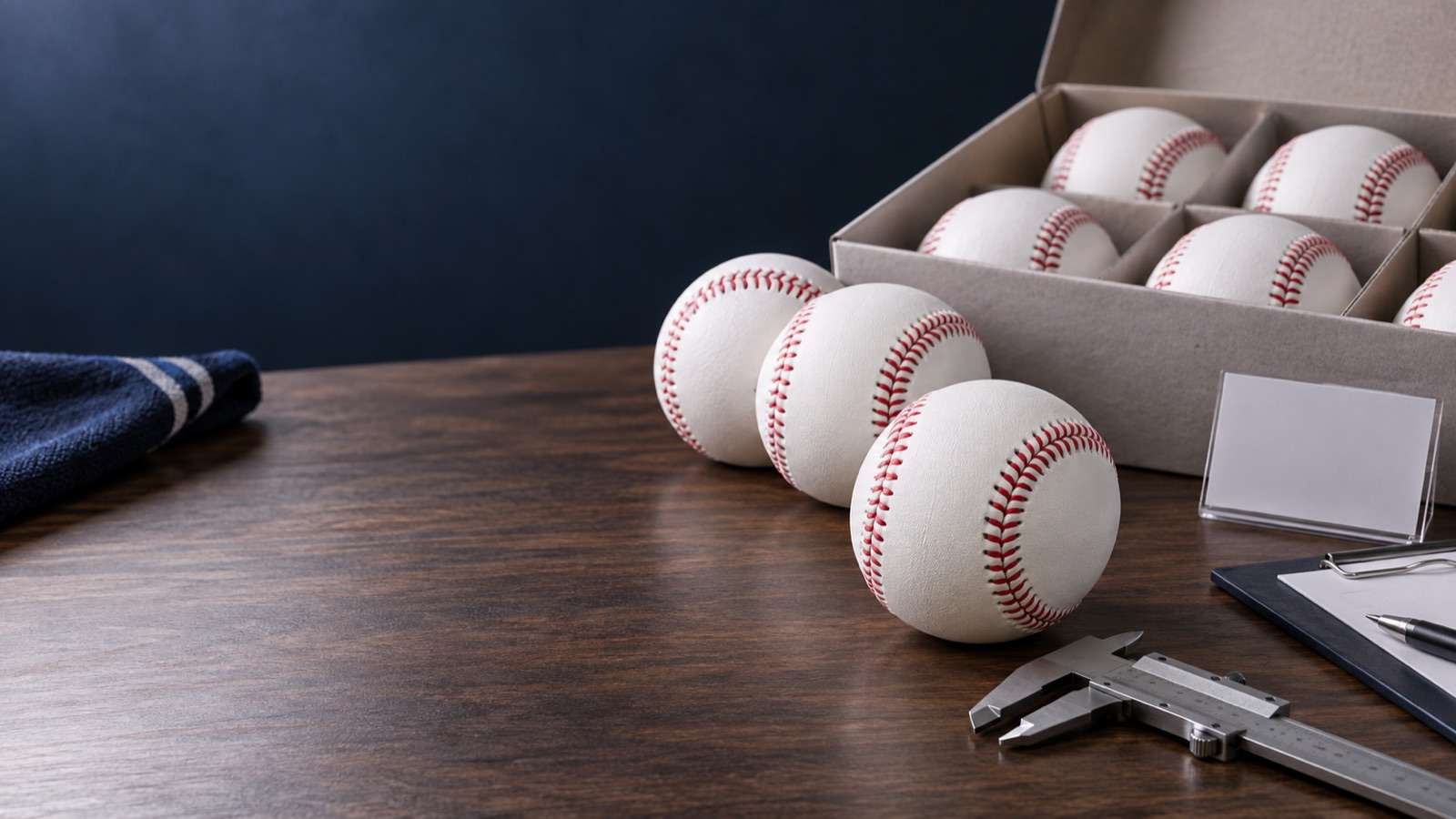
How teams, schools, tournaments and promotional buyers can specify custom baseballs by use, construction, artwork and quality checks.
Custom baseballs can support team training, school programs, tournaments, sponsor campaigns and branded gifts, but buyers should not treat every branded ball as the same product. A playable practice ball, a game-specification ball and a presentation ball have different construction, marking and quality requirements. This guide explains how bulk B2B buyers can create a clear specification, compare supplier proposals and approve samples without relying on vague claims.
The first decision is not color or logo placement. It is the ball’s intended use. Once that is fixed, a manufacturer can recommend a suitable core, winding, cover, seam profile, printing method and packaging format. Buyers who begin with artwork often receive attractive samples that may not perform as expected on the field.
Choose the right custom baseball for its use
A good request for quotation should separate products by use case. If one order serves several purposes, list each version as a separate line item. That makes quotations easier to compare and prevents a promotional specification from being substituted for a playable ball.
Practice and training baseballs
Training balls need repeatable feel, durable covers and consistent seams across the order. Clubs and academies may prioritize durability and cost per session, while pitching or batting programs may require tighter tolerances. State the age group, training surface, expected weekly use and whether the balls will be used indoors, outdoors or in machines.
Competition and game-use baseballs
For organized competition, identify the exact league, governing body and season. Do not accept “official size” as proof of compliance. Ask the supplier to map the proposed construction and test results to the rules that apply to your event. Major League Baseball’s official rules information is a useful reference for professional specifications, but schools, colleges and youth leagues may follow different standards.
Promotional and presentation baseballs
Promotional baseballs are designed primarily for branding, display, signatures, giveaways or sponsor activation. They may use larger printed areas, unusual colors or presentation packaging. A promotional ball should not be described as suitable for sanctioned play unless its construction and markings have been verified against the relevant rules.
Understand baseball construction before ordering
Baseball construction affects feel, flight, durability and price. A buyer does not need to become an engineer, but the quotation should name the important components instead of using generic terms such as “premium quality.”
Core and winding
The center may use cork, rubber or a combined construction, followed by layers of yarn or other winding material. The core and winding influence firmness, rebound and shape retention. Ask whether the proposed model is intended for youth practice, adult training, competition or display, and request a written construction breakdown for the approved sample.
Leather or synthetic cover
Leather covers are commonly associated with higher-level play and a traditional feel. Synthetic covers can offer practical durability and moisture resistance for training programs. Neither label alone proves performance. Buyers should compare material grade, surface consistency, abrasion resistance and how the cover behaves after repeated use.
Raised, flat and low-profile seams
Seam height changes grip and how a ball moves through the air. Raised seams may suit many youth and training applications, while lower-profile seams are often requested for higher-speed play. Specify the target seam profile and inspect stitch spacing, tension, alignment and loose ends on the pre-production sample.
Plan logo customization without damaging usability
Custom baseballs with logo artwork can be produced for teams, sponsors and corporate buyers, but decoration must match the use. Printing, stamping and other marking methods behave differently on curved, textured covers. A large dark graphic may look strong in a digital mock-up yet become uneven across seams or wear quickly during play.
- Team marks: keep fine details and small text to a minimum.
- Sponsor logos: confirm brand colors and minimum clear space before sampling.
- Event details: test dates, names and serial information at actual print size.
- Presentation products: consider individual boxes or display stands as a separate packaging specification.
Supply vector artwork where possible, along with Pantone or another agreed color reference. Confirm the print area, orientation, number of colors and whether decoration crosses or approaches a seam. For playable balls, confirm that added marks are permitted by the applicable competition rules.
What a professional baseball RFQ should include
A structured RFQ produces more reliable quotations than a message asking only for a price. Use the same specification for every supplier so that differences in materials and testing remain visible.
- Intended use: practice, game, promotional, autograph or presentation
- Target league, age group and governing standard, if applicable
- Required quantity per design and estimated repeat-order volume
- Core, winding, cover material and seam preference
- Logo files, colors, decoration area and artwork variants
- Packaging, carton labels and destination country
- Sample requirement, inspection plan and requested delivery window
If you are building a coordinated equipment range, use our custom sports balls buyer’s guide to align specifications across sports. You can also review our manufacturing services before preparing the final brief.
Approve a sample before bulk production
A digital artwork proof confirms layout, not physical performance. Request a representative pre-production sample when the order value or intended use justifies it. Record the approved sample with photographs, measurements and a signed specification so that the bulk order has a clear reference.
Physical checks
Check circumference and weight against the buyer’s stated standard, then inspect roundness, surface consistency, seam height and stitch quality. For playable products, agree which compression, rebound, water-resistance or durability tests are relevant. A supplier should not claim certification or approval unless it can provide current, verifiable documentation for that exact product.
Artwork and packaging checks
Inspect color under consistent lighting, check registration and confirm that fine text remains readable. Rub or flex the decorated area according to the intended use to identify premature wear. Verify individual packaging, barcode placement, carton quantities, shipping marks and country-of-origin information before production.
Quality control for the bulk order
Quality control should test a meaningful sample of the finished order, not only the first unit produced. Define acceptable tolerances and defect categories before manufacturing begins. Critical issues may include unsafe construction or a product that fails the required specification. Major issues may include incorrect size, open seams, poor shape or materially wrong branding. Minor issues may include small cosmetic variations within an agreed limit.
For repeat orders, keep the approved specification, artwork version and inspection record under the same product code. This reduces avoidable drift when materials, production dates or staff change. It also lets buyers compare failure rates and supplier performance over time instead of relying on memory.
Packaging and logistics for bulk baseball orders
Baseballs are dense, so carton planning matters. Ask for unit dimensions, gross and net carton weight, carton count and pallet assumptions before confirming freight. Teams may prefer reusable ball bags or bulk cartons; promotional buyers may require individual gift boxes. Moisture protection and clear carton labels are especially important for long export journeys and multi-location deliveries.
Confirm the destination, Incoterm, required documents and responsible party for duties before approving the order. A low unit quotation can become expensive when packaging, freight, inspection and customs costs are excluded.
Keyword strategy: build one strong commercial topic
SEMrush US data checked for this plan showed commercial demand for custom baseballs at 590 monthly searches with keyword difficulty 13. Closely related buyer phrases included “custom logo baseballs” at 90 searches and KD 1, “custom printed baseballs” at 70 searches and KD 0, and “custom baseballs with logo” at 50 searches and KD 0. These figures support a focused baseball topic, but they do not justify several near-duplicate pages.
The better structure is one useful commercial baseball page supported by this detailed guide. Logo, printed and personalized variants should be sections or genuine product options unless the specifications and buyer intent are materially different. Creating thin pages for every wording variation would divide relevance and make internal linking harder, especially for a newer domain with limited authority.
Common sourcing mistakes to avoid
- Choosing a ball by price before defining whether it is playable or promotional
- Using “official” or “approved” without naming and verifying the exact standard
- Approving only a digital mock-up and skipping a physical sample
- Allowing logo placement to interfere with seams or required markings
- Comparing quotations that use different cores, covers or packaging
- Publishing multiple pages that target the same commercial intent
Prepare your custom baseball brief
A strong order begins with intended use, construction, decoration, testing and delivery requirements written in one brief. That gives procurement teams a fair comparison and gives the manufacturer a measurable target. It also reduces revisions, inconsistent samples and disputes after production.
Ready to discuss a team, school, tournament or promotional program? Request a bulk quote from USSportWear with your quantity, destination, use case, target standard and logo files. We will review the brief before recommending a production route.
