A practical football-shirt sizing process for European and international clubs: body vs garment measurements, team worksheets and sample approval.
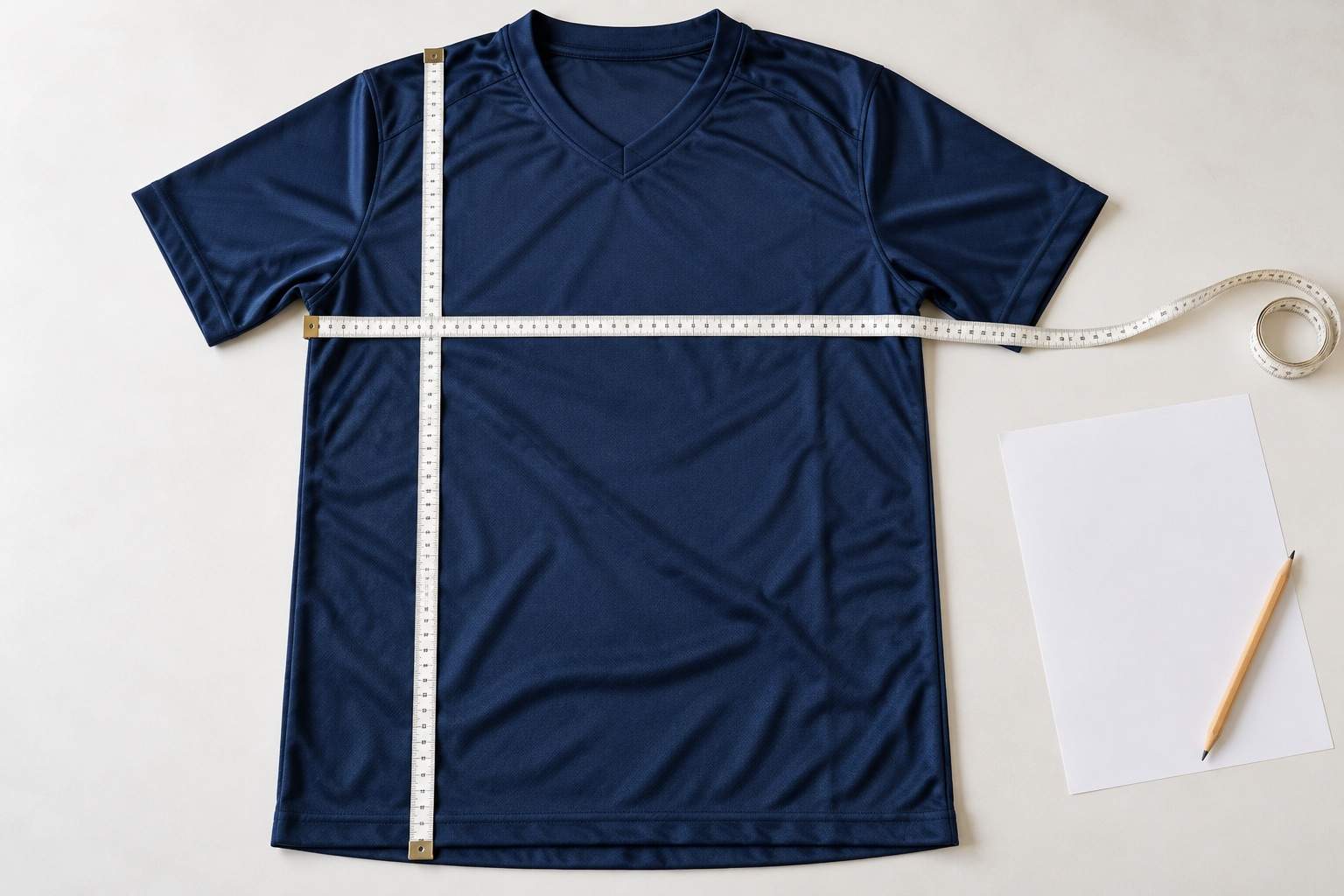
This is a measuring and ordering guide, not a universal USSportWear size chart. Request the chart and an approved sample for the specific football shirt you plan to buy. The featured image is an illustration, not a measured product.
Ordering shirts for a whole football club is harder than picking your own size. Players may wear different brands, some prefer a close match fit while others need extra room, and a label such as “M” does not tell you a garment’s actual chest width or length. For a European or international squad, a measurement-led process in centimetres is more reliable than translating labels by guesswork.
Start with the right kind of measurement
There are two different numbers to keep separate: body measurements describe the player; finished garment measurements describe the shirt. A chest measurement taken around a person is not the same as the width of a shirt laid flat. Major brands make this distinction in their published sizing information; for example, Nike labels its chart measurements as body measurements, while its size-chart help directs shoppers to the chart for the particular product. Your factory’s finished-garment specification should say exactly where every dimension is measured.
A quick mathematical example—not a recommended size—is a jersey measuring 52 cm across the chest when laid flat: twice that flat width is 104 cm around the finished shirt at that point. It does not mean the shirt is intended for a 104 cm body chest. The difference between body and garment measurements provides wearing ease, which varies with fit, fabric stretch and personal preference.
How should players measure themselves?
- Chest: With the tape horizontal, measure around the fullest part of the chest while standing naturally. Do not pull the tape tight.
- Waist and hips: Record these when the chosen jersey cut or full kit requires them, using the widest relevant point for hips and the supplier’s stated waist-measurement method.
- Fit preference: Note whether the player wants a close, standard or roomier fit. This is a preference, not a substitute for dimensions.
- Units: Use centimetres for the team sheet and state that explicitly. If a player submits inches, convert using 1 inch = 2.54 cm rather than mixing units in one column.
For children’s teams, ask for the chosen product’s youth chart and check height as well as chest. Do not assume an adult XS equals a youth size. If your club orders both men’s and women’s cuts, use the specific chart for each silhouette, not one shared letter-size conversion.
How do you measure a sample shirt?
Lay the approved shirt on a flat surface without stretching it. Record the chest width at the supplier’s stated point (often just below the armholes), the body length from the agreed shoulder point to the hem, the hem width, and the sleeve measurement if sleeve fit matters. Photograph the tape placement so the club and manufacturer are measuring the same points. The pictured illustration shows the general idea but is not a technical measurement diagram; follow the agreed specification for exact start and end points.
Compare those figures with a shirt the player already likes, measured in the same way. A comfortable reference garment can reveal a too-short body or tight chest that an S/M/L label would miss. Ask the supplier whether dimensions are for the unwashed finished garment and what production tolerance applies. If the sample is changed, request a revised measurement sheet before signing off.
What belongs on the club size worksheet?
- Player identifier (a roster number is enough for initial sizing).
- Required cut: adult, women’s, youth, goalkeeper or another approved pattern.
- Body chest measurement in cm and any other dimensions the supplier’s chart requires.
- Preferred fit and the chosen product-specific size after sample review.
- Quantity for each size and any spare stock the club decides to order.
- Names and playing numbers in a separate final artwork check, after sizes are approved.
A simple worksheet makes it easier to total the order and catch gaps before production. Share only the personal data needed to fulfil the order, and limit access to the team organizer and supplier. For cross-border orders, agree on a single unit system and specify whether measurements are body or garment measurements on every column.
Should you order from a “European size conversion” chart?
Only as an early reference. An EU, UK or US size label is not a substitute for the exact garment specification of the selected shirt. Even two jerseys from the same brand can use different cuts. If your team has players used to several brands, have them compare actual dimensions or try the supplier’s sample rather than mapping each player’s usual label directly to your new order. That is especially important when switching between a fitted match jersey and a looser training top.
Final checks before a bulk order
Ask for the chosen style’s size chart, fabric and cut description, at least one representative fit sample, finished-garment measurement points, allowed tolerance, and the process for resolving a size dispute. Confirm the quantities by size and style, then cross-check the decoration sheet for every name and number. Our football-shirt decoration guide explains why a kit’s graphics also need sample approval; our soccer-uniform buying guide covers other club-order decisions.
USSportWear says it offers sampling and fit confirmation as part of its manufacturing process. Send the team’s measurement brief through the custom kit inquiry and ask for the chart for your exact design. The safest order is based on that verified chart and a physical sample—not a generic international conversion table.
