How sublimation printing works, which fabrics it suits, how it compares with DTF and screen printing, and what clubs and brands should specify before bulk production.
Sublimation printing is one of the main methods used to produce fully customised football shirts, basketball uniforms, cycling jerseys and other polyester teamwear. Instead of placing a layer of ink or vinyl on top of a finished garment, heat turns sublimation dye into a gas so it bonds with compatible fibres. The design becomes part of the fabric.
This guide explains what buyers, clubs and private-label brands should check before approving a sublimated sportswear order. If you are comparing several decoration methods, also read our football-shirt printing comparison.
How does sublimation printing work?
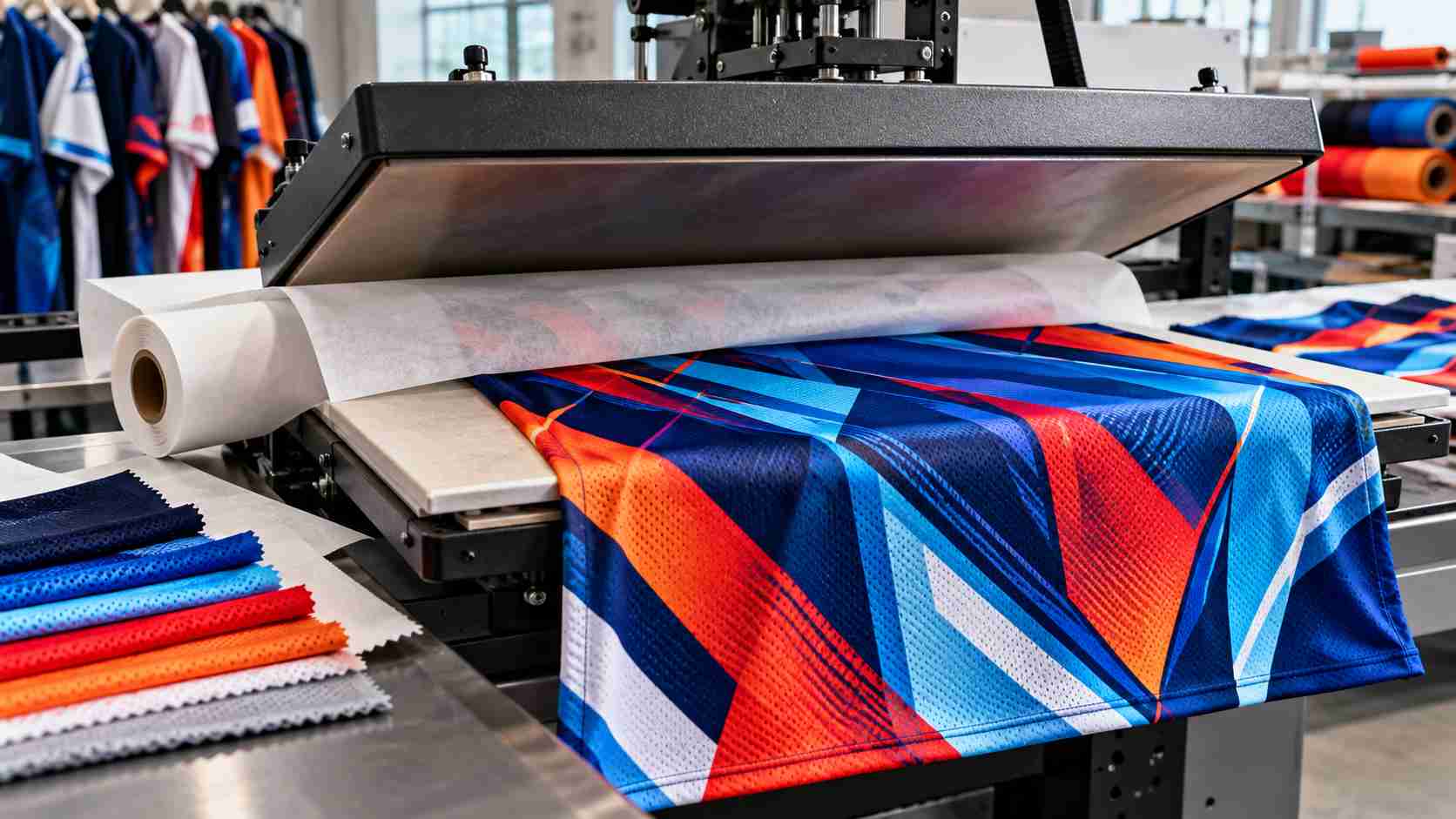
A production-ready design is printed in reverse onto transfer paper with specialist dye. Heat and pressure then transfer that dye into polyester fibres. For all-over teamwear, the fabric panels are normally printed before they are cut and sewn. This helps the artwork cover each panel consistently and avoids trying to press a three-dimensional finished garment.
- Create the artwork at the correct panel dimensions.
- Check logos, names, numbers, colours and safe areas.
- Print the mirrored artwork onto transfer paper.
- Transfer the dye to suitable polyester fabric with controlled heat and pressure.
- Cut the printed panels, align important graphics and sew the garment.
- Inspect colour, registration, seams, measurements and personalization.
You can see this production service on our sublimation-printing page.
Which fabrics work with sublimation?
Sublimation is best suited to polyester and polyester-rich performance fabrics. The dye bonds with synthetic fibres; it does not produce the same result on ordinary cotton. A blend may accept some colour, but the final appearance depends on its polyester percentage, construction, finish and base colour.
White or light fabric generally gives the cleanest and brightest result because standard sublimation does not print an opaque white ink layer. Printing onto a dark base changes or hides colours. Buyers should approve the exact fabric and a physical colour sample rather than judging the result only from a monitor.
Fabric weight is also important. Lightweight mesh can improve airflow, while a denser interlock can provide more coverage and structure. Review our sportswear fabric-selection options when preparing a specification.
Why clubs and brands use sublimated jerseys
- Complex artwork: gradients, repeating patterns and multi-colour graphics can be included in one panel design.
- Integrated personalization: player names, squad numbers and sponsor graphics can be built into the artwork.
- Low surface build-up: there is no thick vinyl layer over most of the garment.
- Print durability: correctly processed dye is inside compatible fibres rather than sitting as a film on top.
- Consistent identity: one design system can extend across match shirts, shorts and training pieces.
These benefits do not remove the need for sampling. Stitching can pass through a graphic, colour can vary between fabric lots, and patterns can shift where separate panels meet.
Sublimation vs screen printing, DTF and heat transfer
Sublimation
Best for polyester garments with all-over artwork, many colours, gradients or integrated names and numbers. It is less suitable when a buyer wants a natural-fibre garment or an opaque print over a dark cotton base.
Screen printing
Useful for bold, repeatable artwork and larger runs where the same design is printed repeatedly. Each colour and placement affects production setup. The ink sits on the garment surface rather than becoming part of the fibre.
DTF printing
Direct-to-film transfer can reproduce detailed, multi-colour graphics on a wider range of garments. It creates a surface transfer, so hand feel, stretch, washing and placement should be tested on the intended fabric.
Heat-transfer vinyl
Often practical for names, numbers and straightforward small-batch personalization. It is a surface-applied material and can feel heavier across large areas.
Embroidery remains useful for premium crests and small logos on polos, jackets and structured garments, but it adds thread and backing and is not an all-over printing method. Explore the wider range of options on our custom sportswear page.
Artwork requirements for sublimated sportswear
Send vector logos where possible and identify every approved sponsor mark. The production brief should state garment sizes, panel templates, colours, fonts, name and number lists, logo positions and any areas that must remain clear. Do not rely on a screenshot copied from social media.
For colour-sensitive work, provide a recognised colour reference and approve a physical strike-off or sample. Screens display light, while fabric reflects light, so an on-screen mock-up cannot guarantee the final textile colour.
Common sublimation problems to prevent
- White marks caused by folds or incomplete contact during transfer
- Ghosted edges caused by movement between paper and fabric
- Artwork hidden inside seams or cut beyond the safe area
- Misaligned graphics across front, back, sleeves or side panels
- Incorrect roster spelling or duplicated player numbers
- Colour changes caused by an unapproved fabric or production lot
- Poor logo quality caused by low-resolution source artwork
An approved sample should be treated as the reference for bulk production. Record changes in writing and reapprove any change that affects fabric, artwork, measurements or construction.
What to include in a sublimated-jersey quote request
- Sport, buyer type and intended use
- Garment list and quantities by style and size
- Preferred fabric, weight and performance requirements
- Vector logos and colour references
- Names, numbers and sponsor placements
- Packaging, labels and private-label requirements
- Sample and approval requirements
- Destination and required delivery window
Clubs planning a complete football order can use our custom soccer-uniform buyer guide. When the specification is ready, send USSportWear your quantity, artwork and destination for a manufacturing review and quotation.
Frequently asked questions
Does sublimation printing peel?
Correctly processed sublimation dye bonds with compatible polyester fibres rather than forming a separate vinyl-like layer. Surface transfers and added badges can have different durability.
Can cotton shirts be sublimated?
Standard dye sublimation is designed for polyester or suitable polyester-rich materials. Cotton requires a different print process or coating, which changes the result.
Should a jersey be printed before or after sewing?
All-over custom jerseys are commonly printed as flat panels before cutting and sewing. This provides better control than pressing a completed garment, although panel alignment still needs careful inspection.
What files should a buyer send?
Provide vector logos, approved colours, roster data, fonts or outlined lettering, garment quantities and any placement rules. The manufacturer should confirm the final production template.
