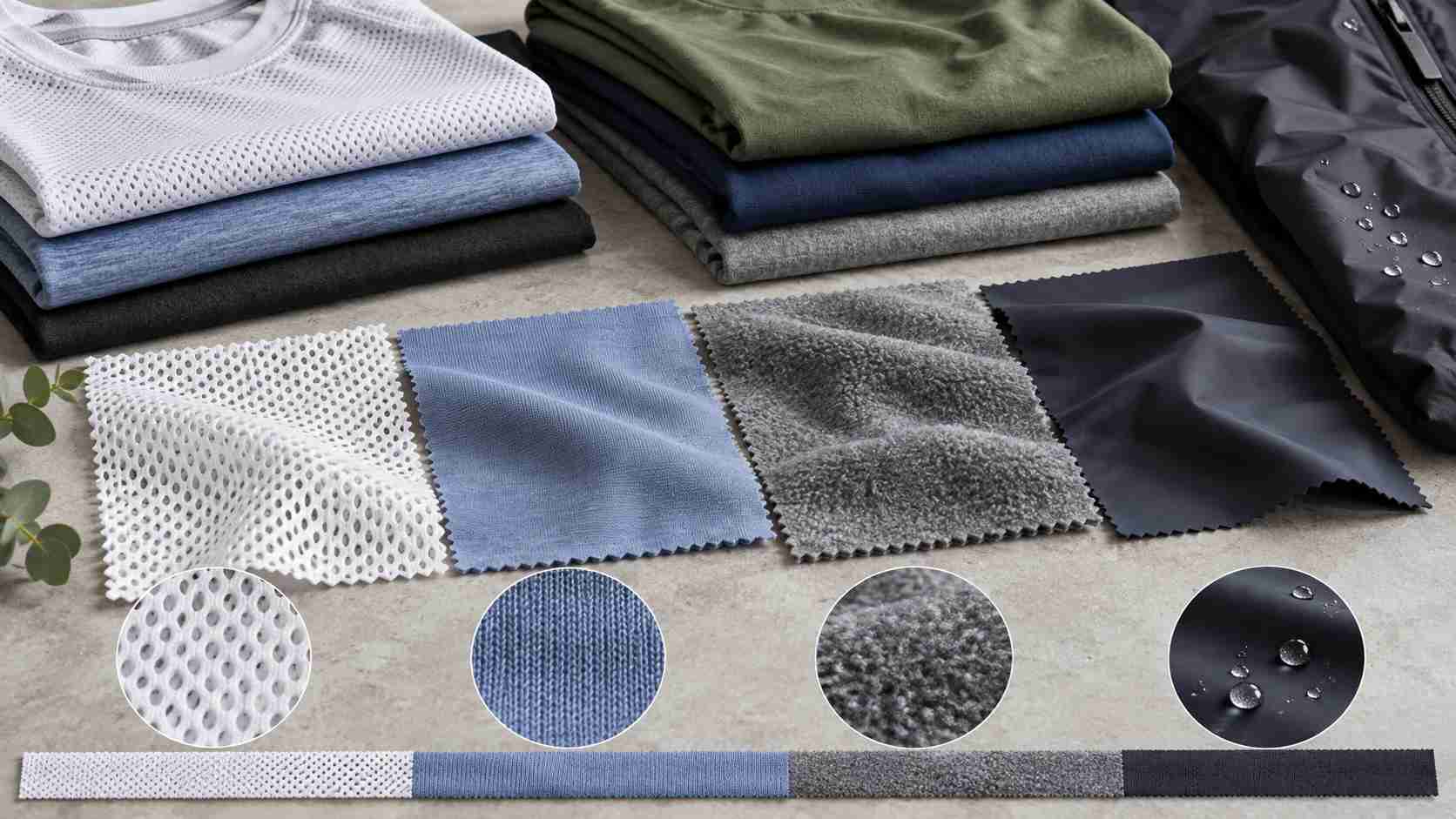
Understand fabric GSM and how weight, knit structure, fibre blend and end use affect custom jerseys, training wear, tracksuits and team jackets.
GSM means grams per square metre. It measures fabric mass over a fixed area, helping buyers compare the weight of textiles used for jerseys, training tops, tracksuits and jackets. GSM is useful, but it is not a quality grade by itself.
Two fabrics with the same GSM can feel and perform differently because their fibre blend, knit structure, yarn, finishing and stretch are different. A bulk specification should therefore combine GSM with the intended sport, climate and durability requirement.
What does a higher GSM mean?
A higher number generally indicates more material per square metre. That can produce greater opacity, structure or abrasion resistance, but it can also add warmth and wet weight. A lower GSM can feel lighter and improve airflow, yet very light pale fabrics may become transparent or lose structure.
Indicative sportswear ranges
The following bands are planning references, not universal standards. Approve the exact fabric from the manufacturer.
- 120–150 GSM: lightweight mesh, hot-weather training pieces and some match jerseys where ventilation is important.
- 140–180 GSM: common territory for polyester football, basketball and volleyball jerseys, depending on knit and use.
- 180–240 GSM: heavier training garments, polos, rugby applications and lighter tracksuit fabrics.
- 240–350+ GSM: fleece, hoodies, structured tracksuits and outerwear components where warmth and body matter.
A jacket's total performance cannot be described by shell GSM alone. Lining, insulation, membrane, coating and seam construction must also be specified.
GSM by product type
Football and soccer jerseys
Match shirts usually prioritise low weight, moisture movement and airflow. Training shirts may use a somewhat denser construction for repeated washing. See our custom soccer-uniform buyer guide.
Rugby jerseys
Contact play increases the importance of knit stability, close fit and reinforced seams. A higher GSM can help, but the weave and construction still determine whether a fabric resists pulling. Our rugby kit guide covers those checks.
Basketball and volleyball uniforms
Airflow and freedom of movement matter. Mesh or interlock construction, armhole finishing and stretch can be as important as the stated weight.
Tracksuits and team jackets
Warm-up and travel garments need enough structure for repeated wear, decoration and pockets. Winter garments require a full layered specification rather than one GSM number. Compare options through our custom tracksuit guide.
GSM, knit and fibre blend must be read together
Polyester interlock, micro-mesh, pique and fleece can behave differently at similar weights. Elastane changes stretch and recovery. A brushed inner surface changes warmth and hand feel. Moisture-wicking finishes and coatings can influence performance but should be tested rather than accepted as marketing terms.
Review the available sportswear fabric-selection service and our explanation of moisture-wicking performance fabric.
How to approve fabric for a bulk order
- Describe the sport, climate and whether the garment is for matches, training, travel or retail.
- Request the fibre composition, nominal GSM and knit structure in writing.
- Inspect colour, opacity and hand feel on the intended colourway.
- Stretch the material and check recovery.
- Test print clarity, embroidery stability or transfer adhesion.
- Wash the approved sample according to its care instructions.
- Confirm that bulk fabric must match the approved reference within agreed tolerances.
Questions to send a manufacturer
- What is the fabric composition and nominal GSM?
- Is the structure mesh, interlock, jersey, pique or fleece?
- What stretch and recovery does the garment require?
- Is the light colour sufficiently opaque?
- Which decoration method has been tested on it?
- Will the same approved fabric be used for bulk production?
When preparing a project, use the manufacturer quote checklist and send USSportWear the sport, quantity, climate and preferred fabric characteristics.
Frequently asked questions
Does higher GSM always mean better quality?
No. GSM measures weight, not yarn quality, colourfastness, breathability, pilling resistance or seam strength.
What GSM is best for a football jersey?
Many polyester jerseys sit roughly within 140–180 GSM, but the correct selection depends on knit, climate, opacity, competition use and durability.
Should a buyer approve only a swatch?
A swatch helps narrow the choice, but a complete garment sample is better for checking fit, seams, decoration, drape and performance together.
