Compare volleyball cover and construction choices and learn how clubs should document pressure and sample inspection.
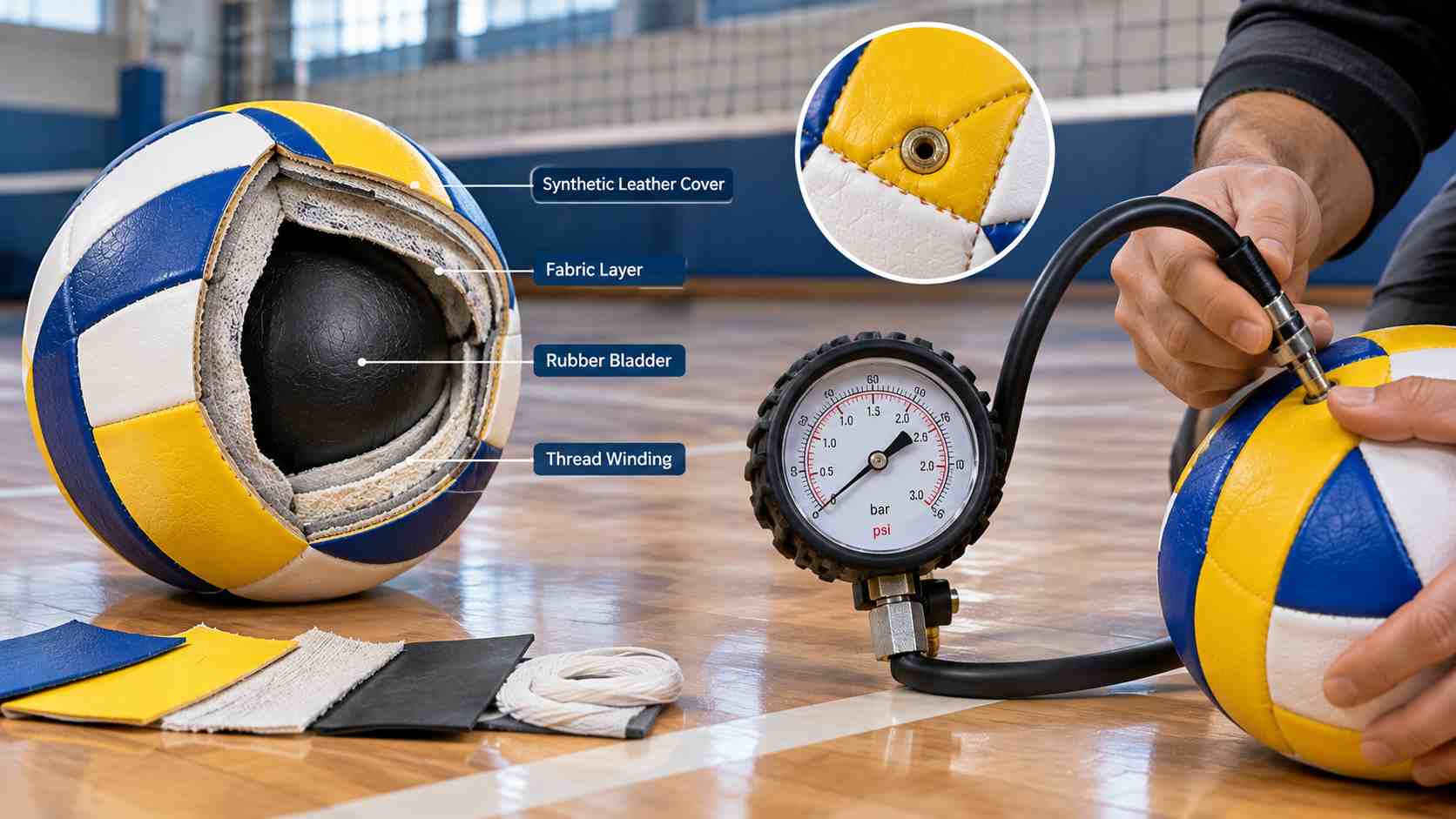
A volleyball combines a cover, backing or lining, panel assembly, bladder and valve. The right combination depends on indoor, beach, training, youth, match or promotional use. Buyers should approve the complete construction and measurable sample rather than ordering from the phrase “best quality volleyball.”
What is a volleyball made of?
The outer cover is commonly synthetic leather or another engineered material, supported by backing layers. Inside, the bladder retains air and the valve enables inflation. Panels may be stitched, bonded or assembled using another documented process. Surface texture and layer construction influence touch, grip, shape and durability.
Indoor, beach and training volleyballs
Indoor balls are selected for controlled court conditions and handling. Beach balls must be specified for outdoor sand, moisture and visibility. High-frequency training programmes may prioritise durability and consistency across a larger quantity. Do not assume one model is optimal for all three uses.
Youth and programme sizing
Confirm the ball size and weight required for the player group and competition. If a club serves multiple age groups, split the RFQ by specification and quantity instead of ordering one generic ball.
Volleyball air pressure
Use the pressure range marked on the exact ball or stated in its approved specification. Check it with a suitable low-pressure gauge and record the pressure used for bounce, circumference and air-retention inspection. A hand squeeze cannot provide repeatable quality-control evidence.
Sample inspection
- Finished weight, circumference and roundness
- Panel alignment and seam or bond consistency
- Surface feel and grip for the intended environment
- Bounce at the documented pressure
- Air retention after an agreed interval
- Artwork clarity, colour and abrasion resistance
Custom artwork and repeatability
Approve logo placement on a three-dimensional mockup and physical sample. Fine text can lose clarity across textured panels and seams. Keep the approved sample, artwork proof and construction sheet for repeat orders.
Browse custom volleyballs, read our bulk buyer's guide, or request a quote with the intended use, player group, quantity and artwork.
