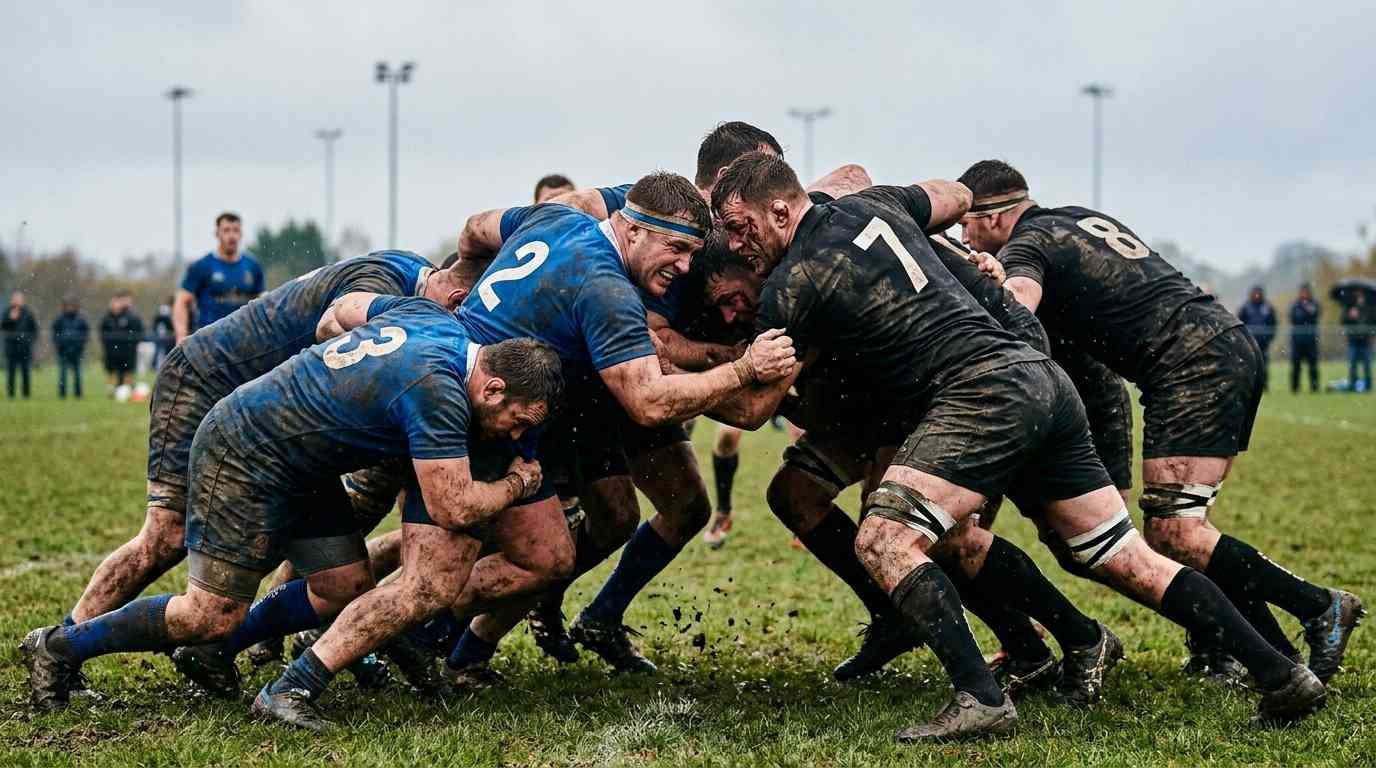
How clubs, schools and academies can specify custom rugby jerseys and kits — durable fabric construction, fit, and bulk-order requirements.
Custom rugby jerseys and kits need to survive something most team sportswear doesn't have to plan for: sustained physical contact. A rugby jersey specification that copies a soccer or basketball jersey's fabric and construction will underperform on the pitch, regardless of how good the artwork looks. This guide is for clubs, schools and academies planning a bulk rugby kit order, and complements our custom rugby balls guide.
Durability comes before design
Rugby jerseys are grabbed, pulled and tackled through in a way soccer and basketball jerseys never are. Fabric weight, weave tightness and seam construction all need to account for this — a lightweight, loosely woven fabric that looks and feels fine on a hanger can tear at the seams within a single match under game conditions. Confirm with your manufacturer that the proposed fabric and construction are actually specified for rugby's contact demands, not simply adapted from a lighter teamwear fabric.
What to ask about construction
- Fabric weight (GSM) — rugby kit generally runs heavier than a soccer jersey to withstand grabbing and contact
- Weave tightness — a tighter weave resists tearing better than an open mesh
- Seam reinforcement — double-stitched or reinforced seams at high-stress points like the collar and underarm
- Fit — rugby jerseys are typically cut closer to the body than soccer jerseys specifically so there's less loose fabric for an opponent to grab
Women's, youth and reversible kit options
Rugby programmes increasingly need women's-specific cuts alongside standard kit — specify this explicitly rather than assuming a smaller men's size will fit correctly through the shoulders and torso. Youth sizing should be split by age group and quantity rather than given as one total. Reversible kit, useful for training squads that scrimmage internally, is available but less common for rugby than basketball, since match kit is normally single-sided.
Full kit planning: jersey, shorts and socks
A rugby kit order typically covers jersey, shorts and socks together, with home and away colourways where the squad needs both. Confirm whether shorts need reinforced construction at stress points as well — rugby shorts see similar contact demands to the jersey and benefit from the same durability considerations.
Customization for rugby kit
Club crest, sponsor artwork and player numbering are confirmed from your written specification before production, the same as any team kit order. Send vector artwork for crests and sponsor logos wherever possible. Rugby numbering conventions can differ by position and competition (forwards and backs are often numbered by position rather than squad list order) — confirm this with your union or competition if it applies to your team.
What to include in a rugby kit RFQ
- Squad size and age groups, with quantities split by size
- Cut: standard, women's-specific or youth
- Home/away colourway requirement
- Fabric weight and durability requirement — confirm it's specified for contact use
- Crest, sponsor artwork and numbering requirements
- Sample requirement and approval process
- Destination and required delivery date — rugby's established markets include the UK and Australia as well as the US
Test the sample under real conditions
If possible, have the sample tested in an actual training session rather than approved on appearance alone — a rugby jersey's real test is how it holds up under grabbing and contact, not how it looks in a fitting room. Check seam strength specifically at the collar and shoulder, the areas most exposed to grabbing during play.
Request a custom rugby jersey quote
Send your squad size, cut, fabric requirement and artwork to get a tailored quotation. USSportWear works with clubs, schools and academies on custom rugby kit programmes — browse our custom rugby jerseys category or request a quote directly with your requirements.
