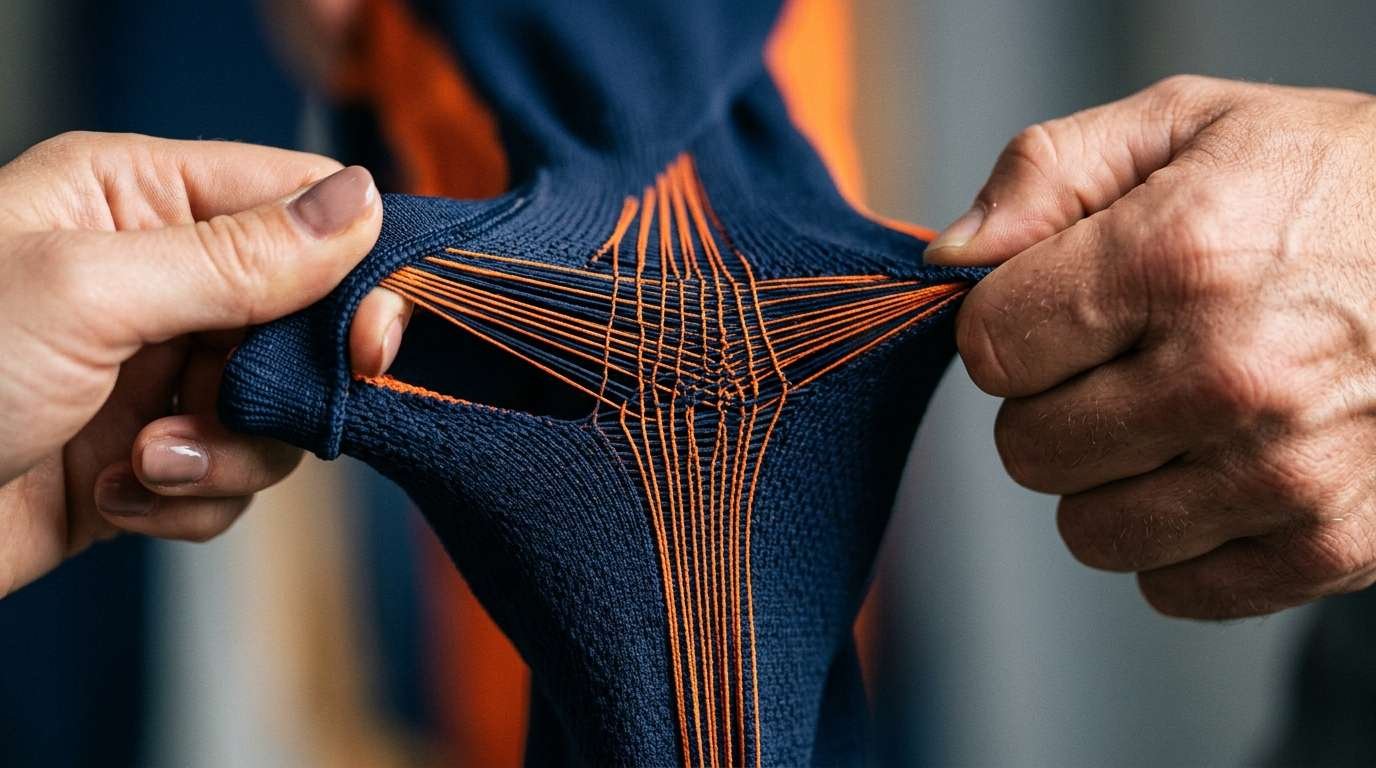
Elastane is a synthetic fiber prized for its exceptional stretch and recovery — this guide covers what it actually is, how "elastane," "spandex," and "Lycra" relate, and how it's used in sportswear manufacturing.
What Is Elastane?
Elastane is a synthetic fiber known for its ability to stretch to several times its original length and snap back to shape afterward. It's made primarily from polyurethane, a polymer engineered specifically for elasticity rather than strength or absorbency, which is why it's almost never used on its own — it's blended with other fibers like cotton, nylon, or polyester to add stretch to a fabric without changing its core character.
In short: elastane isn't a fabric by itself. It's an ingredient blended into fabric.
What Is Elastane Fabric?
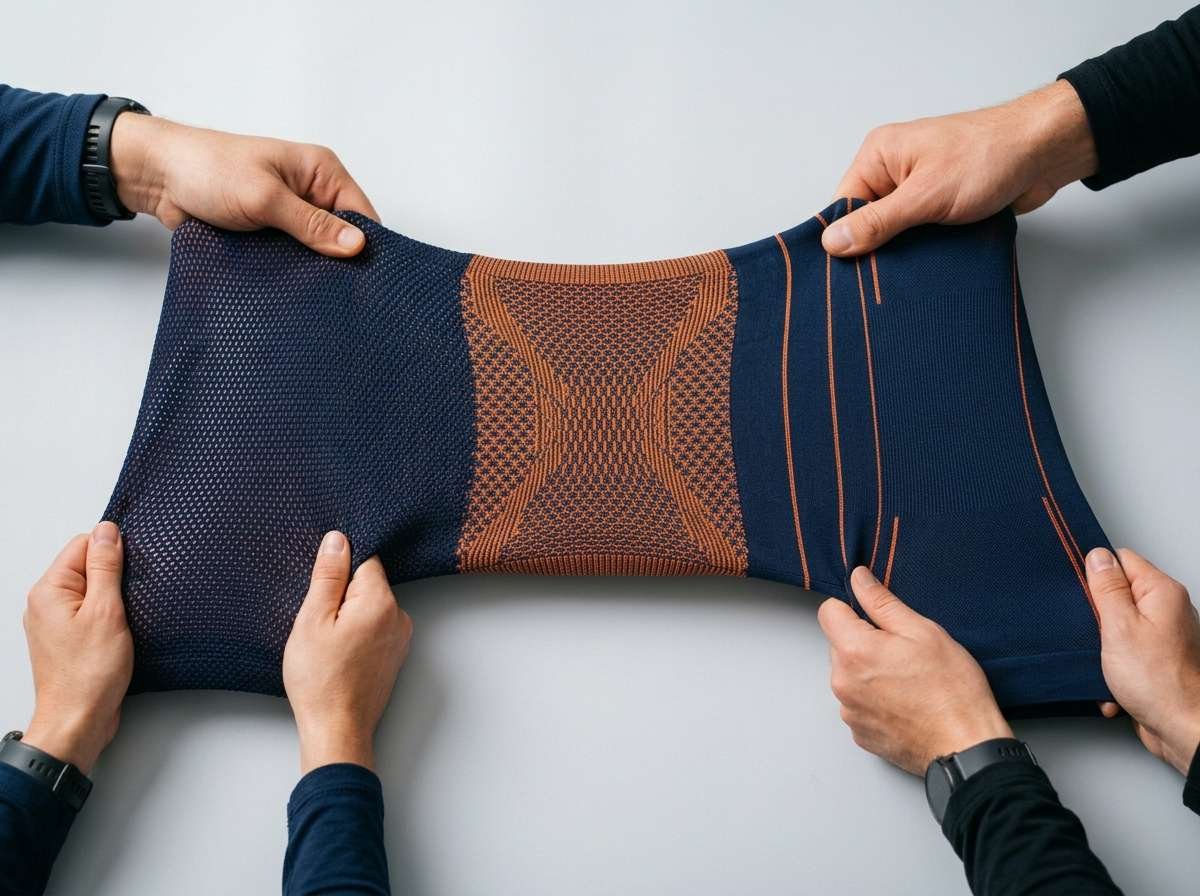
"Elastane fabric" refers to any textile that has elastane fibers woven or knitted into it — typically in small percentages, from as little as 2% up to around 20% for very high-stretch performance wear. The base fabric (cotton, polyester, nylon) provides the bulk structure, durability, and feel, while the elastane content is what allows the finished fabric to stretch and recover instead of staying stiff or losing shape after wear.
This is why a soccer jersey or compression legging can hug the body and move with an athlete through a full range of motion without sagging, bagging out at the knees, or tearing at the seams.
Elastane vs Spandex vs Lycra — Are They the Same Thing?
Yes, functionally. This is one of the most common points of confusion, so it's worth being direct about it:
- Elastane is the generic fiber name used across Europe, Asia, and most of the world.
- Spandex is the same fiber, under the generic name used in North America (it's an anagram of "expands").
- Lycra is a specific brand name for elastane fiber, originally trademarked by DuPont (now owned by The Lycra Company).
So "elastane vs spandex" isn't really a comparison between two different materials — it's the same material with two different regional names, the way "trainers" and "sneakers" describe the same shoe. "Lycra" is narrower: it specifically means elastane manufactured under that particular brand, similar to how "Kleenex" refers to a brand of facial tissue rather than a separate product category.
Key Properties of Elastane
- Extreme elasticity — can stretch up to 5–8 times its resting length
- Shape recovery — returns to its original form after stretching, resisting the permanent stretching-out that plain cotton or polyester develops over time
- Lightweight — adds stretch without adding meaningful weight or bulk to a garment
- Blend-only use — almost always combined with another fiber rather than used alone, since pure elastane fabric would lack durability and breathability
- Moderate durability — holds up well under repeated stretching, but degrades faster than the base fiber under high heat, chlorine exposure, or harsh detergents
How Elastane Is Used in Sportswear Manufacturing
In performance apparel, elastane content is a deliberate manufacturing decision tied to how a garment needs to move:
- Compression wear (leggings, base layers, sleeves) typically uses higher elastane percentages, often 15–20%, for maximum stretch and muscle support
- Team jerseys and uniforms (soccer, basketball, rugby, volleyball) use lower elastane percentages, usually 3–8%, blended with polyester — enough stretch for a full range of motion without compromising the fabric's durability under repeated washing and match wear
- Tracksuits and training wear sit in between, balancing stretch with structure for everyday training use
Getting the elastane percentage right for a garment's actual use case — not just adding "as much stretch as possible" — is part of what separates a fabric spec built for real athletic performance from one built purely to feel stretchy on a hanger.
How to Care for Elastane-Blend Fabric
- Wash in cold or warm water — high heat breaks down the elastane fibers over time and permanently reduces stretch recovery
- Avoid the tumble dryer's high-heat setting; air dry or use a low-heat setting instead
- Avoid chlorine bleach, which degrades elastane fibers faster than the base fabric
- Wash inside out to reduce surface friction on high-elastane panels
Sourcing Elastane-Blend Fabric for Custom Sportswear
As a factory-direct manufacturer, we work with elastane-blend performance fabrics across our custom jerseys, compression apparel, and team uniform lines — matching the elastane percentage and base fiber to how the garment will actually be worn, not a fixed one-size-fits-all blend. If you're specifying fabric for a bulk or private-label order, our team can walk through blend options and MOQ for your specific use case.
