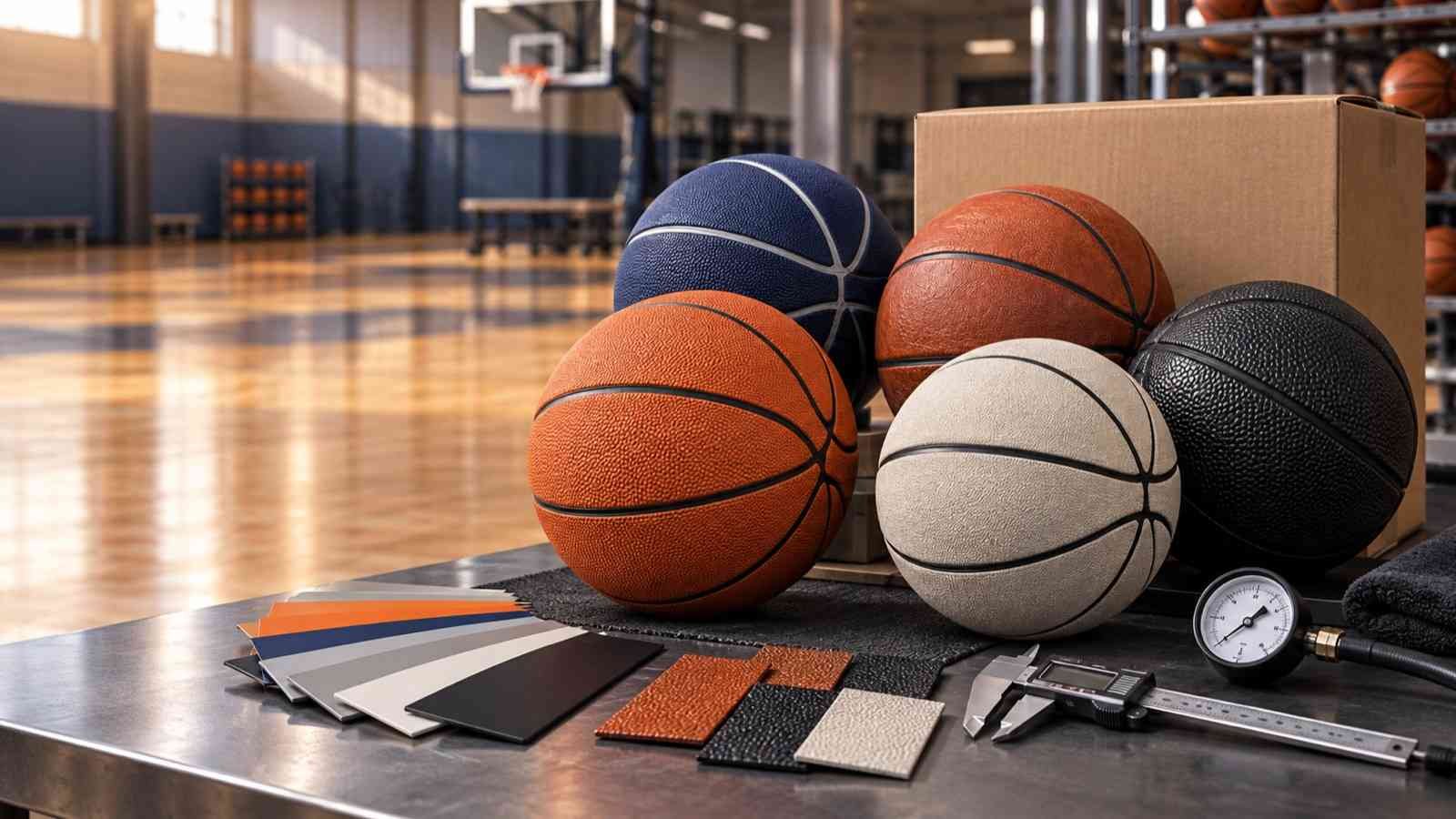
Learn how schools, clubs, academies and promotional buyers can specify custom basketballs by size, cover, construction, artwork and use case.
Custom basketballs can be effective team equipment, sponsor merchandise or promotional products, but only when the specification matches how the ball will actually be used. A school ordering durable practice balls has different needs from a tournament organizer creating presentation balls or a brand sourcing a private-label range. This guide explains the decisions bulk buyers should make before requesting samples or a quotation.
USSportWear works with clubs, schools, academies, events and wholesale buyers. If you are planning a wider equipment program, begin with our custom sports balls buyer’s guide, then use this basketball-specific checklist to prepare your brief.
Why the use case comes before the logo
A common buying mistake is to begin with artwork and color. The first decision should be the playing environment. Indoor hardwood, outdoor asphalt, school gyms, skills training and display use place different demands on the cover, grip, bounce and construction.
Write one clear sentence describing the purpose of the order. For example: “weekly indoor training for a secondary-school program,” “outdoor community event,” or “branded giveaway for a sponsor activation.” That sentence helps a manufacturer recommend a realistic build instead of treating every customized ball as the same product.
Questions to answer before sourcing
- Will the balls be used indoors, outdoors or in both environments?
- Are they intended for matches, training, skills work, fundraising or display?
- Which age groups and competitions will use them?
- How important are long wear, moisture control and consistent grip?
- Does the buyer need individual packaging, carton labels or retail-ready presentation?
Choose the correct basketball size
Size is not a cosmetic choice. It affects handling, player development and suitability for a program. FIBA’s official equipment guidance identifies size 7 for men’s competitions, size 6 for women’s competitions and size 5 or lightweight size 5 for mini-basketball. Buyers should still confirm the rules of their own league, school association or tournament before approving production.
The official FIBA basketball rules are a useful technical reference. A supplier should never be asked to guess the governing standard from the buyer’s country alone.
Practical size planning for bulk orders
- Size 7: commonly specified for adult men’s programs.
- Size 6: commonly specified for women’s and many youth programs.
- Size 5: commonly used for younger players and mini-basketball.
- Mini or promotional sizes: suitable for souvenirs, sponsor gifts and display, not regulation play.
If one organization serves several age groups, separate the order by size and require size markings to be visible. This prevents equipment managers from mixing balls during distribution.
Compare cover materials by environment
The outer cover controls much of the feel and durability. Buyers will often see options described as rubber, composite synthetic material or genuine leather. The right choice depends on use, budget positioning and expected maintenance.
Rubber basketballs
Rubber is a practical choice for outdoor programs, camps and high-volume school use. It is generally selected for abrasion resistance and easy maintenance. The trade-off is that feel and grip may differ from premium indoor balls.
Composite basketballs
Composite covers can support a softer hand feel and are often considered for indoor training or indoor/outdoor programs. “Composite” is a broad description, so ask for a sample, surface texture details and the intended court type rather than relying on the name alone.
Leather basketballs
Leather is associated with premium indoor play, but it may require a break-in period and careful use. A leather option should be evaluated against the target competition, storage conditions and buyer expectations. Do not pay for a premium material when the order is mainly for outdoor activation or giveaway use.
Understand basketball construction
A basketball is more than its cover. The carcass, winding, bladder, channel design and valve all influence shape retention, air retention and response. Suppliers may offer molded rubber, laminated or other constructions depending on the product level.
For a serious team or school order, request a specification sheet that identifies the cover material, bladder type, panel or channel construction, recommended use and size tolerances. Marketing phrases such as “professional quality” are not a substitute for measurable specifications.
What to check on a pre-production sample
- Roundness and visible symmetry
- Grip when dry and after light moisture
- Bounce consistency on the intended surface
- Valve position and slow air loss over time
- Print alignment across channels and textured areas
- Color accuracy under indoor and natural light
- Carton, label and packaging accuracy
Plan the logo for real-world visibility
Basketballs with logos should be designed for a curved, textured surface. Fine type, thin lines and large solid artwork can lose clarity when placed across deep channels or aggressive pebbling. Ask for a placement mockup that shows panel boundaries and valve location.
Vector artwork is preferable because it can be scaled cleanly. Supply Pantone or other recognized color references when brand consistency matters. If the ball uses a dark cover, confirm whether the print method requires an underbase so light artwork remains visible.
Useful artwork options
- Club crest plus team name
- School logo plus department or graduation year
- Tournament identity plus sponsor mark
- Private-label brand plus model and size marking
- Numbered presentation balls for awards or fundraising
A strong procurement file includes the vector logo, approved colors, exact print locations, minimum clear space and a written rule for which marks may not be changed.
Match customization to the buying goal
Training balls need legible, durable branding without compromising handling. Tournament balls may need sponsor visibility and consistent visual presentation. Promotional basketballs may prioritize print area and packaging, while a private-label product line needs repeatable specifications, barcodes and brand-control documents.
These should not be combined into one vague request. If the order has several goals, create separate line items. This makes sampling, quotation and quality control easier.
Build a useful request-for-quote package
A precise request helps suppliers quote comparable products. Include destination country and postal code because freight, carton size and delivery terms affect the landed decision. Do not ask only for “best price”; it encourages suppliers to make different assumptions.
Include these details
- Ball type, size and intended court environment
- Approximate quantity for each size and design
- Cover material and construction preference
- Logo files, colors, placement and number of print positions
- Sample requirement and approval process
- Packaging, labeling and carton-marking needs
- Destination, target delivery window and preferred trade terms
- Any competition-specific test or documentation requirement
Use our custom manufacturing services page to understand the wider development process. When your specification is ready, you can request a bulk quotation with the details above.
Quality control for custom basketballs
A logo approval alone is not product approval. The inspection plan should cover appearance and performance. Buyers should agree on tolerances, sample status and inspection timing before mass production begins.
A practical approval sequence
- Approve the written product specification.
- Approve artwork placement and color references.
- Evaluate a physical sample on the intended court.
- Confirm packaging and carton markings.
- Authorize production only after written sample approval.
- Use a pre-shipment inspection appropriate to order value and risk.
For repeat orders, keep an approved reference sample and the final specification version. This reduces drift in color, texture or construction when the product is reordered months later.
How to compare supplier quotations
The lowest unit figure may represent a different cover, bladder, print method or packaging assumption. Normalize every quotation before comparing it. Put material, size, construction, print positions, sample cost, packaging, production time, freight basis and payment terms into one table.
Also ask what happens if the approved artwork cannot be reproduced on the selected texture. A capable supplier should flag technical limitations before production, not after branded stock has been made.
Common bulk-order mistakes
- Using one specification for indoor play, outdoor training and giveaways
- Ordering one size for every team in a multi-age program
- Approving a flat artwork file without a ball-placement mockup
- Relying on unverified words such as “match quality” or “official size”
- Skipping a physical sample for a new construction
- Comparing quotes that include different materials or delivery terms
- Publishing certification claims without documentary evidence
SEO and merchandising opportunity for buyers
For clubs and private labels, the product page should explain intended use, size, surface, cover material and customization choices. It should not repeat a generic paragraph across every model. Clear specification tables, original sample photography and buyer guidance are more useful than unsupported superlatives.
SEMrush US data currently shows commercial demand around “custom basketball,” “custom basketballs,” “custom basketball with logo” and related personalized variants. The best page strategy is one strong product or category landing page for the commercial term, supported by this educational guide. Creating many near-identical articles for singular and plural variants would split relevance rather than build authority.
Request a custom basketball quotation
Prepare your size mix, use case, material preference, quantities, destination and vector artwork before contacting a manufacturer. USSportWear can then review the brief, identify missing decisions and prepare a quote-based bulk proposal without inventing a one-size-fits-all price.
Request a quote for custom basketballs for your school, club, academy, tournament, corporate campaign or private-label program.
